Introduction
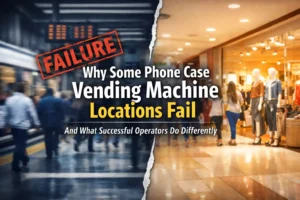
In the traditional vending machine model, location is often reduced to a simple formula: higher foot traffic leads to higher sales. As a result, most vending machines are placed in open areas such as mall corridors, entrances, or transportation hubs.
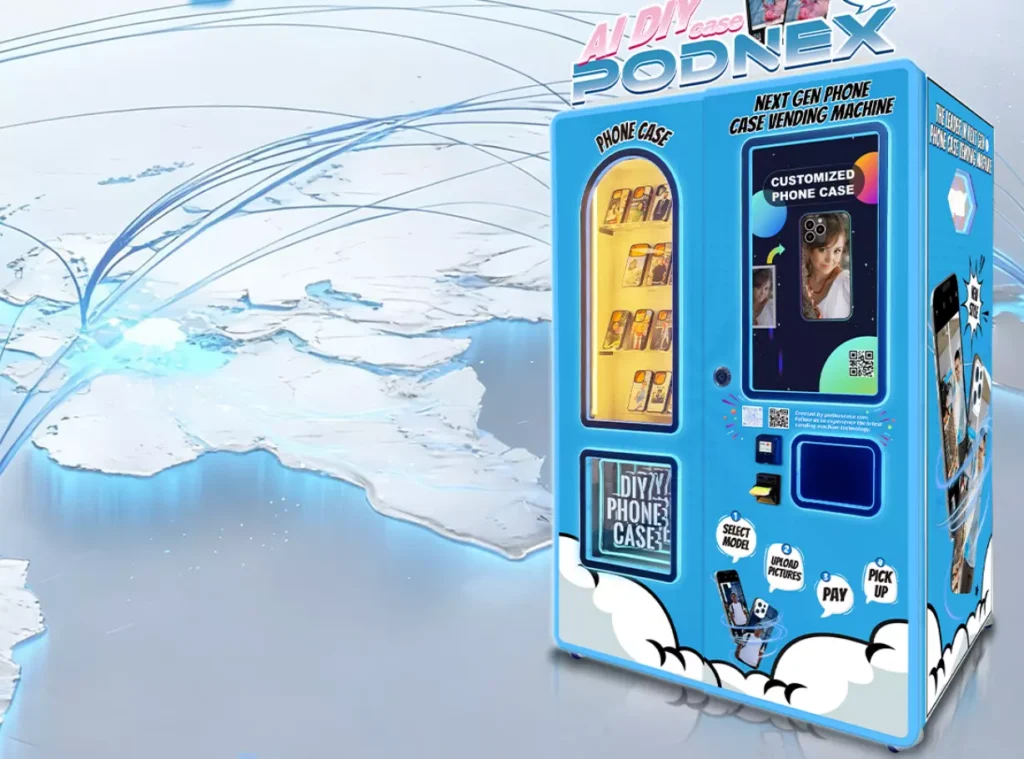
However, recent observations in several Asian markets suggest that this assumption does not always hold true for newer types of automated retail. In particular, some vending machine phone case appear to perform better when they are placed inside retail stores rather than in open public spaces.
This shift raises an important question for operators and investors:
Is visibility alone enough, or does context matter just as much as traffic?
A Different Approach: Store-Integrated Vending
In markets where custom phone case vending machines are more mature, a different deployment model is becoming increasingly common.
Instead of positioning machines in high-traffic corridors, operators are placing them inside:
- Mobile accessory stores
- Lifestyle retail shops
- Small boutique stores in malls
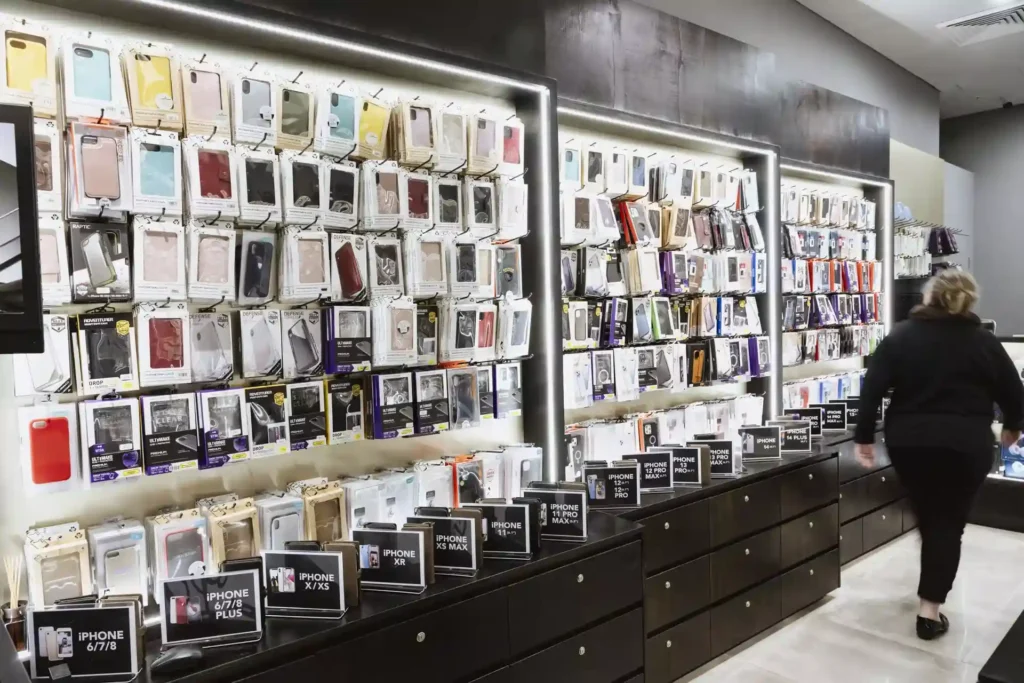
At first glance, this may seem counterintuitive. Open spaces offer more visibility and exposure, while in-store placement limits immediate foot traffic.
However, the results in some locations suggest otherwise.
Why In-Store Placement Changes Customer Behavior
The key difference lies in how customers perceive the machine.
When a phone case vending machine is placed in an open corridor, it is often treated as a standalone device. Passersby may glance at it but hesitate to interact, especially if they are unfamiliar with the concept.
Inside a store, the situation changes.
The environment signals that this is part of a retail experience, not just a machine. Customers are already in a buying mindset, and the presence of related products—such as phone accessories—creates a natural context for engagement.
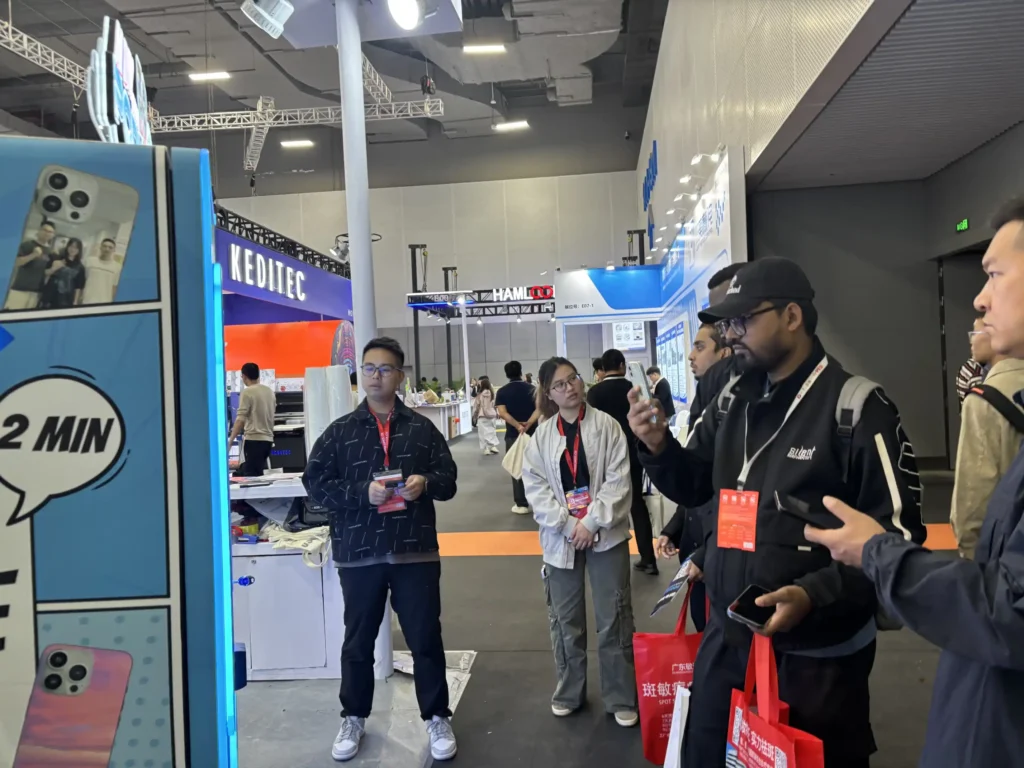
In addition, the store setting provides:
- A sense of trust and legitimacy
- The possibility of guidance from staff
- A more focused interaction environment
These factors can significantly increase the likelihood that a customer will actually try the phone case printing vending machine, rather than simply walking past it.
From Product to Experience
Another important difference is the shift from product-driven to experience-driven retail.
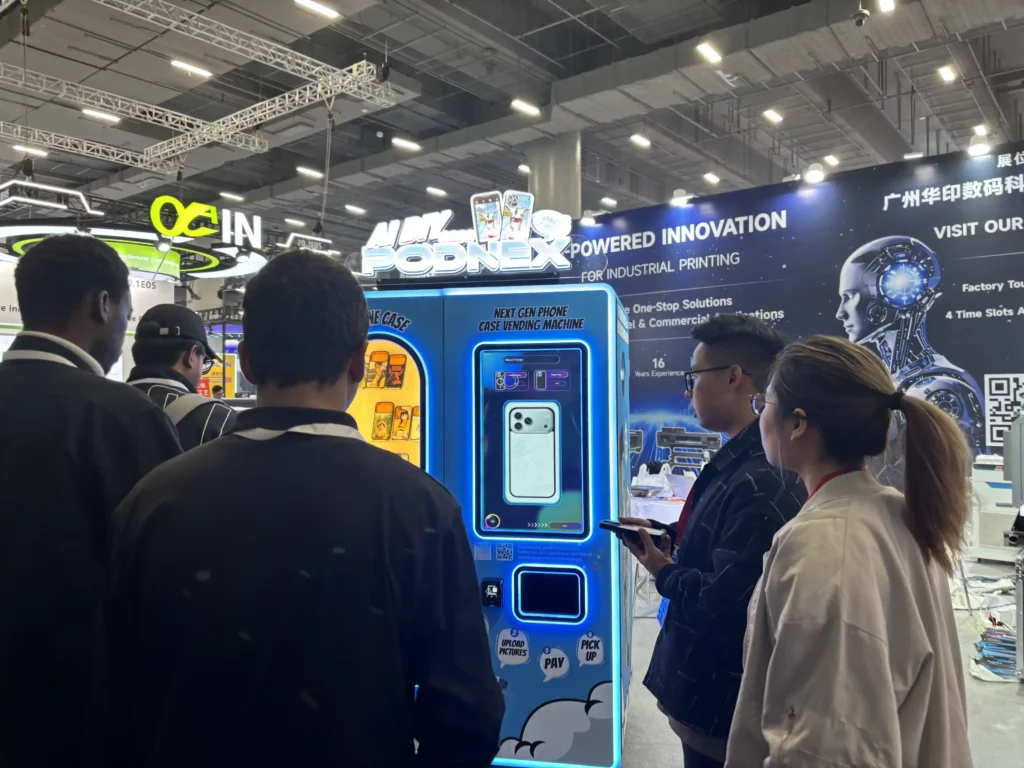
A custom phone case vending machine is not just selling a physical item. It is offering a short creative process:
- Selecting or uploading an image
- Adjusting layout or design
- Watching the printing process
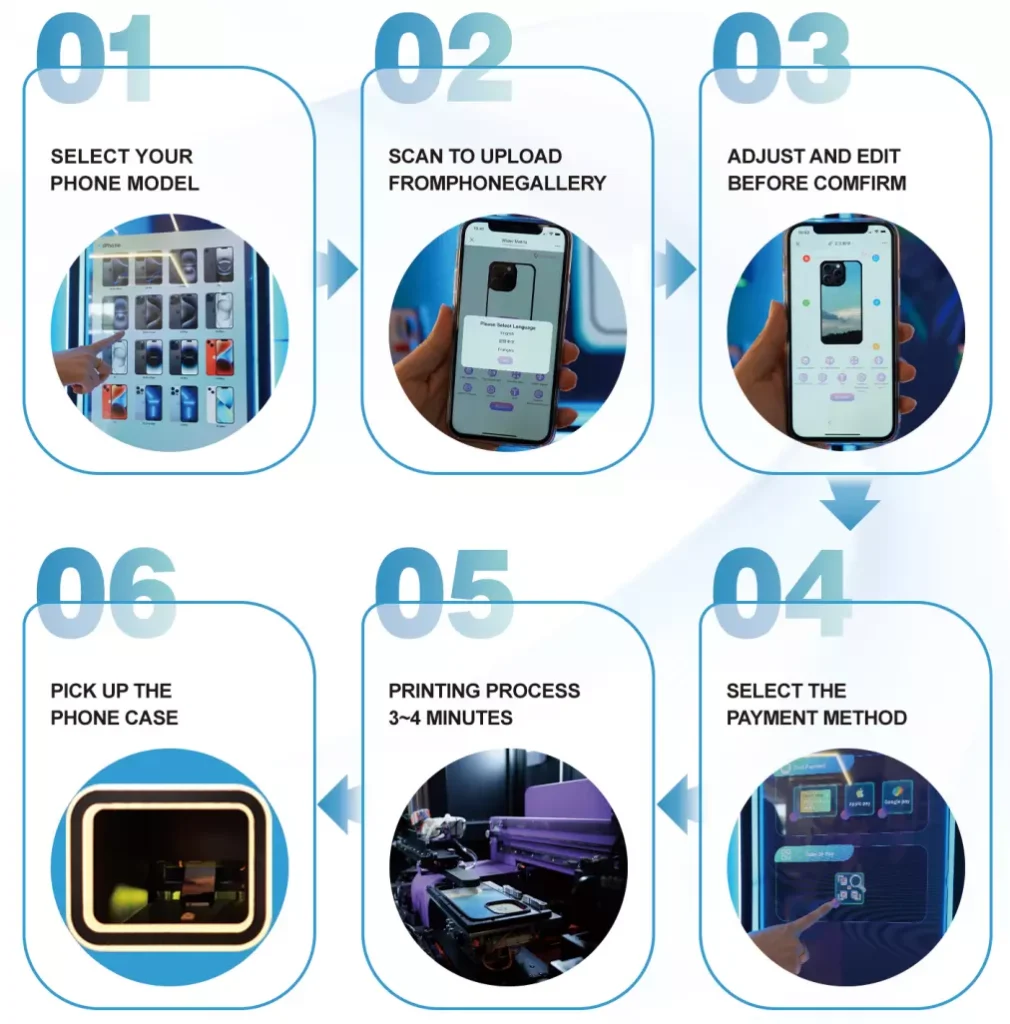
In open spaces, this process may feel exposed or unfamiliar to some customers. Inside a store, it becomes part of a curated environment, where customers feel more comfortable spending time interacting with the machine.
This is especially important for first-time users. Once customers try the process and understand how it works, they are more likely to use it again in other locations.
The Role of Product Relevance
Another factor that influences performance is product relevance.
When a vending machine is placed randomly in a high-traffic area, it may reach many people—but not necessarily the right audience. In contrast, placing a phone case vending machine inside a store that already sells related products ensures that the machine is seen by customers who are more likely to be interested.
For example, customers browsing phone accessories are already thinking about:
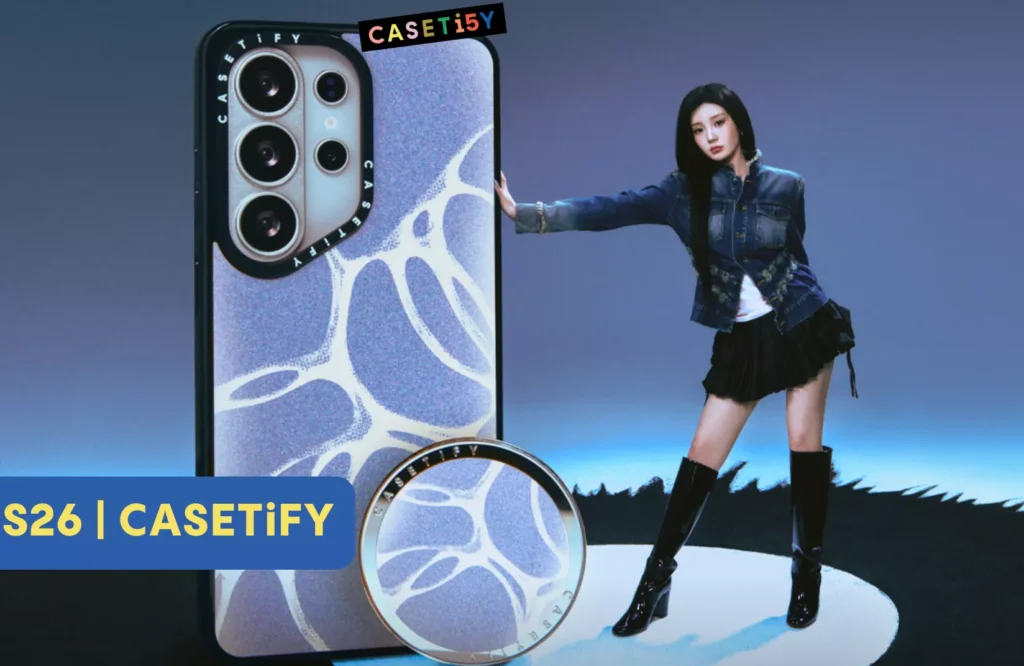
- Upgrading their phone case
- Personalizing their device
- Buying gifts or small items
Introducing a custom printing vending machine in this context feels natural rather than intrusive.
Operational Considerations
From an operational perspective, the in-store model also offers several practical advantages.
Machines placed inside stores benefit from:
- Basic supervision and security
- Cleaner and more controlled environments
- Easier maintenance access
- Reduced risk of misuse
While the goal of a vending machine business is still to minimize labor, having a semi-managed environment can improve long-term stability.
At the same time, operators must balance this with potential trade-offs, such as revenue sharing with store owners or limited visibility compared to open spaces.
What This Means for Emerging Markets
In markets where the phone case vending machine business is still developing, there is often a tendency to follow traditional vending logic: prioritize the busiest locations first.
However, the examples observed in more mature markets suggest that context and user experience may be just as important as raw foot traffic.
For new operators, this opens up additional possibilities:
- Partnering with existing retail stores
- Testing hybrid retail-vending models
- Building brand presence within curated environments
Rather than relying solely on location volume, operators can experiment with different deployment strategies to find what works best in their market.
How PODNEX Thinks About Deployment Strategy
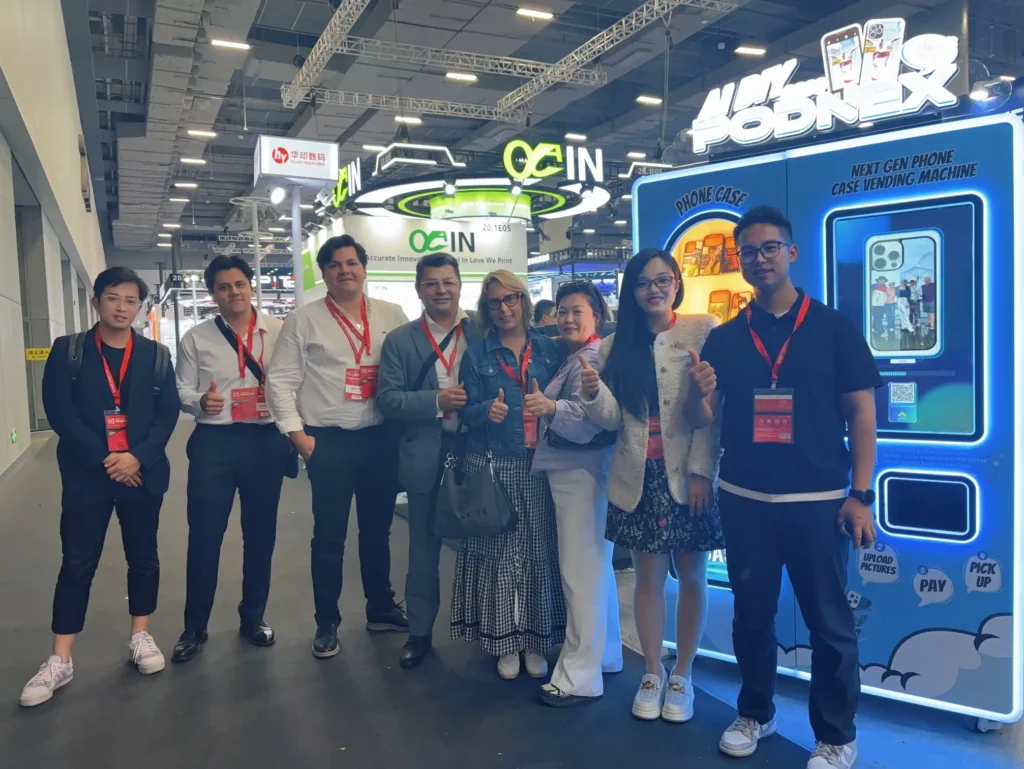
At PODNEX, we have been closely studying how different deployment models perform across regions.
What we have observed is that there is no single “perfect” location strategy for a phone case vending machine. Instead, successful operators tend to adapt their approach based on local consumer behavior and retail environments.
In some markets, open high-traffic areas perform well. In others, integrating machines into existing retail spaces creates a stronger connection with customers.
Because of this, we focus not only on machine design and printing performance, but also on helping partners think through:
- Where the machine fits within a retail environment
- How customers will interact with it
- How to position it as part of a broader experience
As the custom phone case vending machine market continues to evolve, flexibility in deployment strategy will likely become an important factor for long-term success.
Conclusion
The idea that “more traffic always means better performance” is being challenged by newer forms of automated retail.
For machines that rely on interaction and customization, such as phone case printing vending machines, the surrounding environment plays a critical role in shaping customer behavior.
The growing use of in-store deployment models highlights a broader shift in the vending industry—from simple product distribution to experience-driven retail.
For operators entering this space, understanding how placement influences perception and engagement may be just as important as choosing the right location.