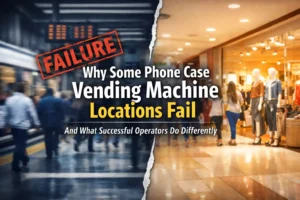
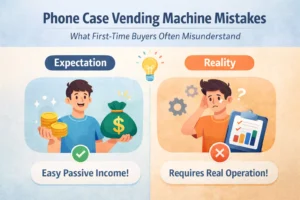
Part I — Understanding the Business
Chapter 1 | Rethinking Phone Case Printing Vending Machines
1.1 This Is Not a Traditional Vending Machine Business
At first glance, a phone case printing vending machine may appear to be just another form of automated retail.
In reality, it represents a fundamentally different business logic.
Traditional vending machines focus on:
- Standardized products
- Price competition
- High-frequency, low-engagement transactions
Phone case printing vending machines, however, operate on a different foundation:
- Personalization instead of standardization
- Experience instead of convenience
- Emotional value instead of pure utility
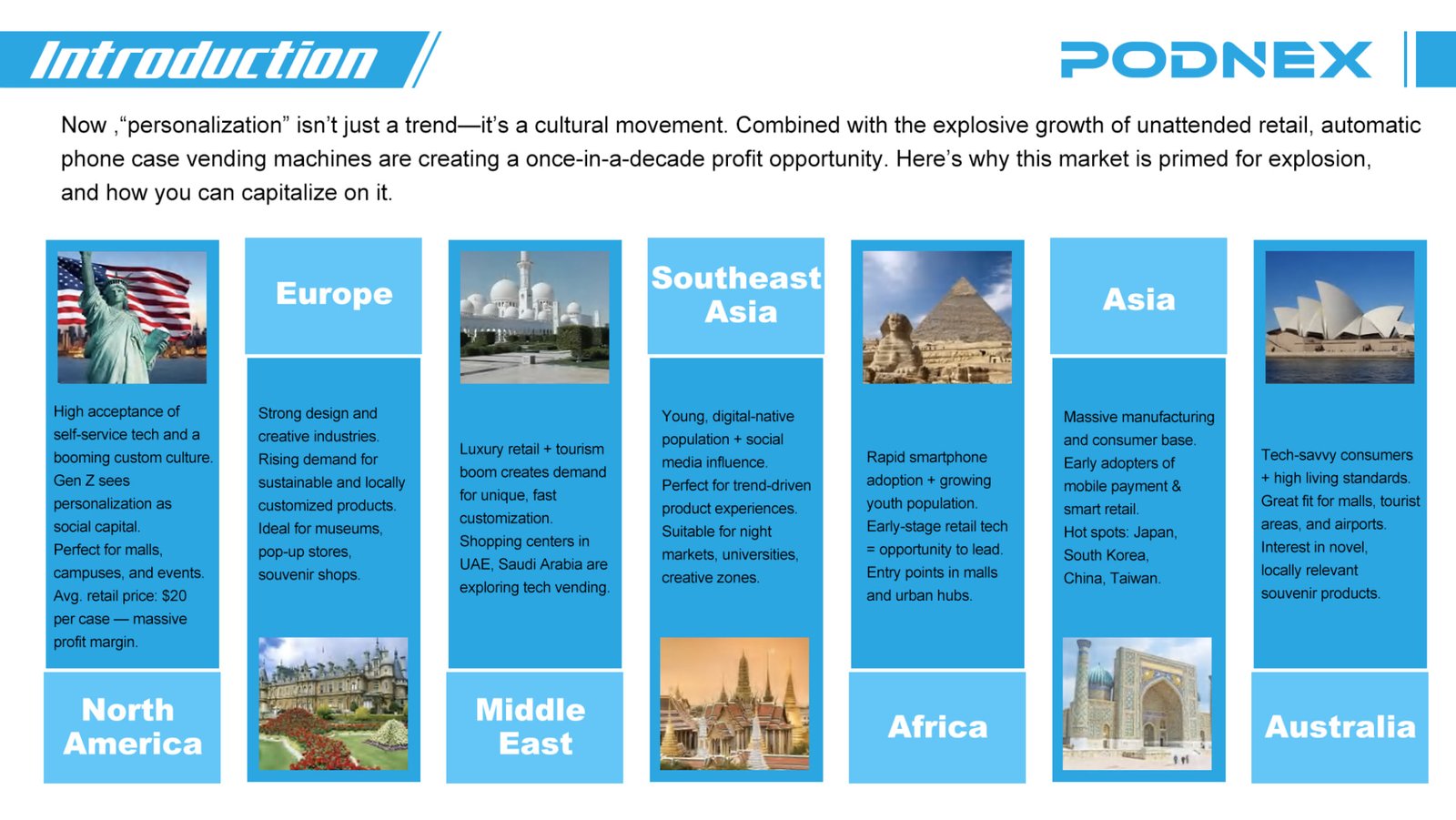
Customers are not buying a phone case because they need one immediately.
They are buying it because they want to express something — a moment, a memory, a feeling, or an identity.
Dimension | Traditional Vending | Online Customization | Phone Case Printing Vending |
Product Type | Standardized | Personalized | Personalized |
Delivery Time | Instant | Days | Instant |
User Emotion | Low | Medium | High |
Location Dependency | Low | None | High |
Purchase Motivation | Convenience | Planned | Impulse + Emotion |
Scalability | High | Medium | High (after validation) |
1.2 From Product Sales to Instant Expression
This business should not be understood as “selling phone cases.”It is better understood as offering instant expression.A phone case becomes:
- A souvenir
- A gift
- A personal statement
- A social artifact worth sharing

The key difference lies in timing.
Traditional customization:
- Requires waiting
- Happens remotely
- Separates emotion from delivery

Instant customization:
-
Happens on the spot
-
Matches emotion with action
-
Converts impulse into purchase
This alignment between emotion, decision, and fulfillment is the core reason this model works.

1.3 Why the Scenario Matters More Than the Product
The same phone case, printed with the same quality, can have very different value depending on the scenario:
-
A shopping mall
-
An airport
-
A tourist attraction
-
A campus or event
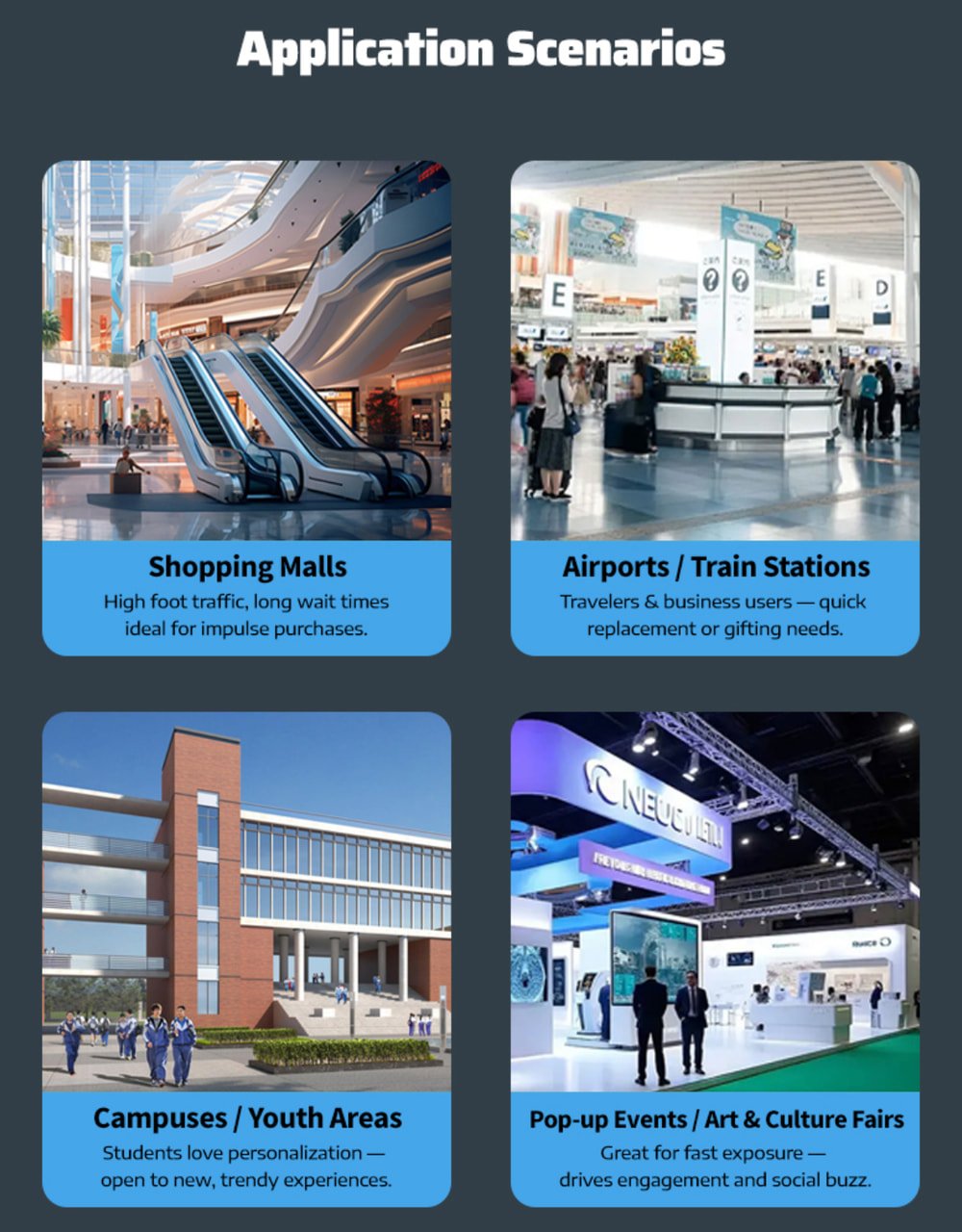
The product does not change —the meaning does.
This is why phone case printing vending machines should be treated as scenario-based retail infrastructure, not as standalone equipment.
Chapter 2 | Why This Model Works
2.1 The Shift Toward Personalization
Consumers today, especially younger generations, are no longer satisfied with purely functional products.They seek:
- Uniqueness
- Identity
- Participation
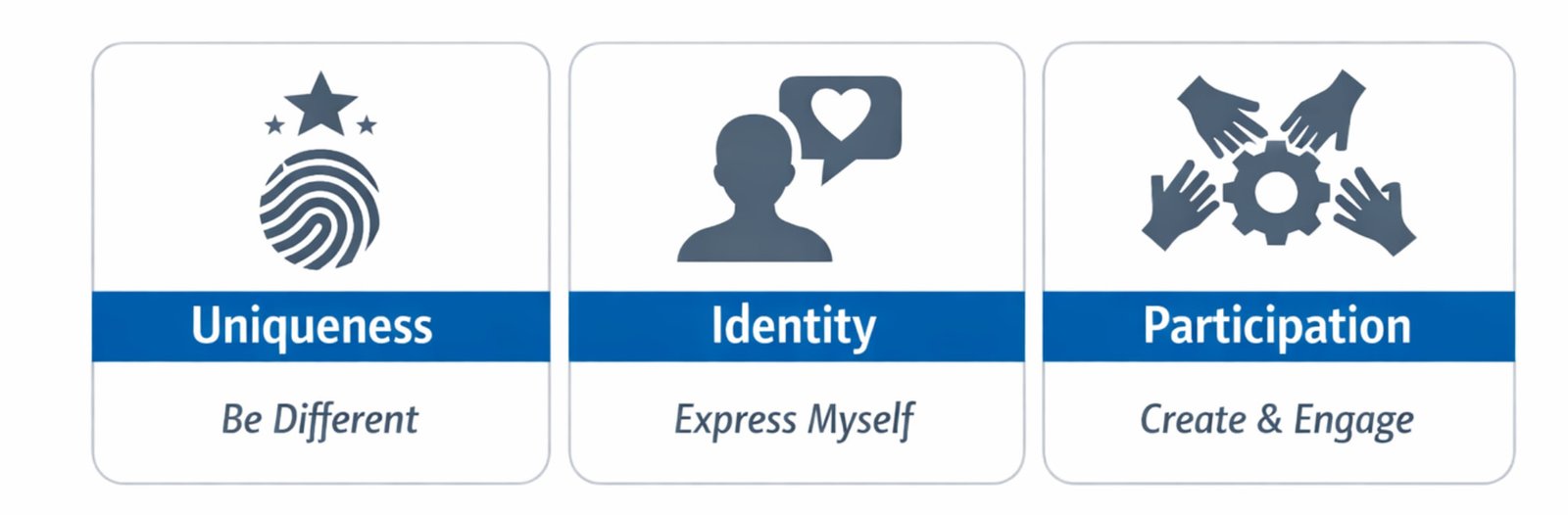
Personalization is no longer a premium niche —it has become a baseline expectation in many consumer categories.
However, most personalization services remain:
-
Slow
-
Online-only
-
Operationally heavy
This creates a gap between desire and access.
Phone case printing vending machines close this gap by delivering personalization instantly, physically, and without friction.
Scenario | Emotional Trigger | User Behavior | Why Customization Works |
Shopping Mall | Browsing / Leisure | Impulse stop | Quick, fun, visible |
Airport | Waiting / Travel memory | Idle time | Souvenir value |
Tourist Attraction | Memory capture | Photo taking | Emotional relevance |
Campus / Events | Identity & belonging | Sharing | Self-expression |
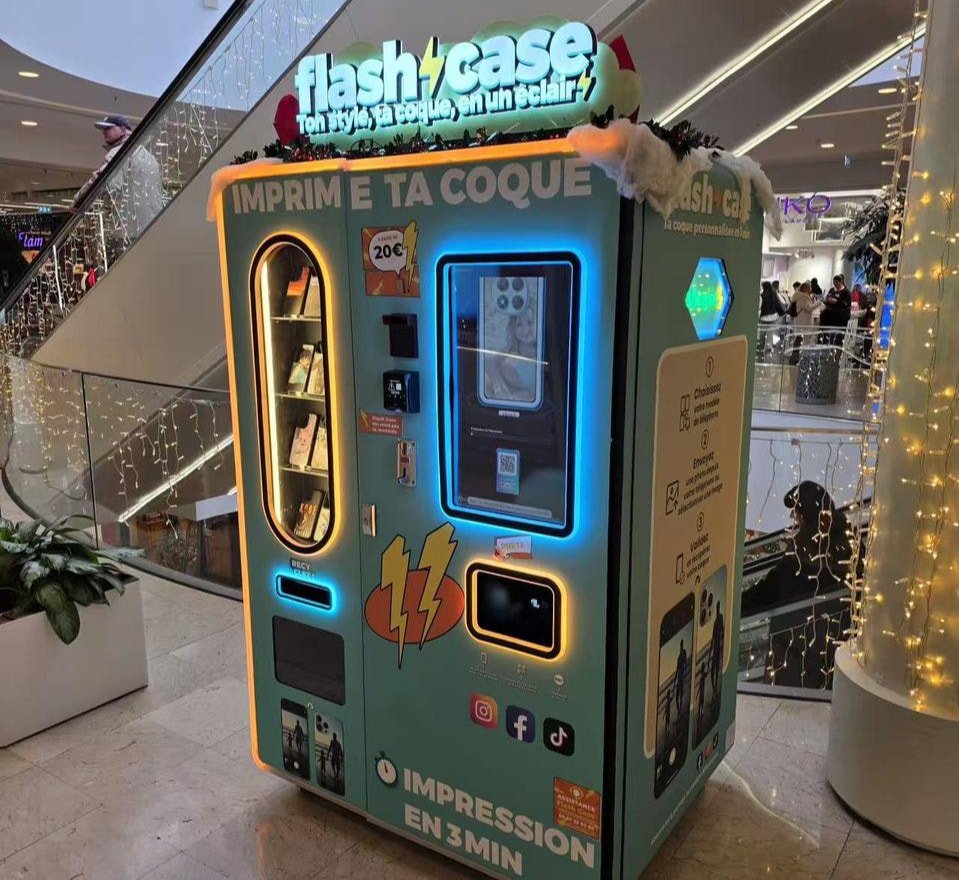
2.2 Why “On-the-Spot” Changes Everything
The success of this model is not driven by technology alone.
It is driven by contextual timing.
People are far more likely to spend when:
-
They are already present in a commercial or emotional environment
-
They have idle time (waiting, browsing, traveling)
-
The decision does not require future commitment
On-the-spot customization turns a casual interaction into a completed transaction — without follow-ups, shipping, or delayed gratification.
This is why conversion rates in physical scenarios often outperform online customization funnels.
2.3 Unmanned Retail as an Enabler, Not the Core
Unmanned operation is often highlighted as the main advantage of vending machines.
In reality, it is not the core value —it is the enabler.
Unmanned systems make it possible to:
-
Operate in premium locations with limited staffing
-
Run small-scale tests without large fixed costs
-
Replicate proven models across multiple locations
The real value lies in combining unmanned operation with emotional consumption, not in automation alone.
Chapter 3 | Why Now
3.1 Market Readiness
This business model could not have worked effectively ten years ago.
Today, several conditions have aligned:
-
Consumers are familiar with self-service kiosks
-
Mobile payments are widely accepted
-
Social sharing behavior amplifies offline experiences
As a result, users no longer hesitate to interact with machines —they expect them.
Aspect | 5–10 Years Ago | Today |
User Trust in Machines | Low | High |
Mobile Payment | Limited | Universal |
Customization Tech | Slow | Fast & Stable |
Social Sharing | Optional | Default Behavior |
3.2 Commercial Spaces Are Actively Seeking New Experiences
Shopping malls, airports, and commercial venues face increasing pressure:
-
Traditional retail traffic is declining
-
Homogeneous stores offer limited differentiation
-
Experience-driven concepts attract attention and dwell time
 Interactive, visually engaging, and shareable installations are now assets, not distractions.
Phone case printing vending machines fit this demand by:
-
Creating engagement without staffing
-
Generating both revenue and visual interest
-
Enhancing the overall space experience
3.3 This Is a System, Not a Short-Term Trend
It is important to clarify one point:
This is not a “get-rich-quick” opportunity.
It is a small but structured business system that:
-
Can be tested with limited risk
-
Can be optimized through execution
-
Can be scaled once validated
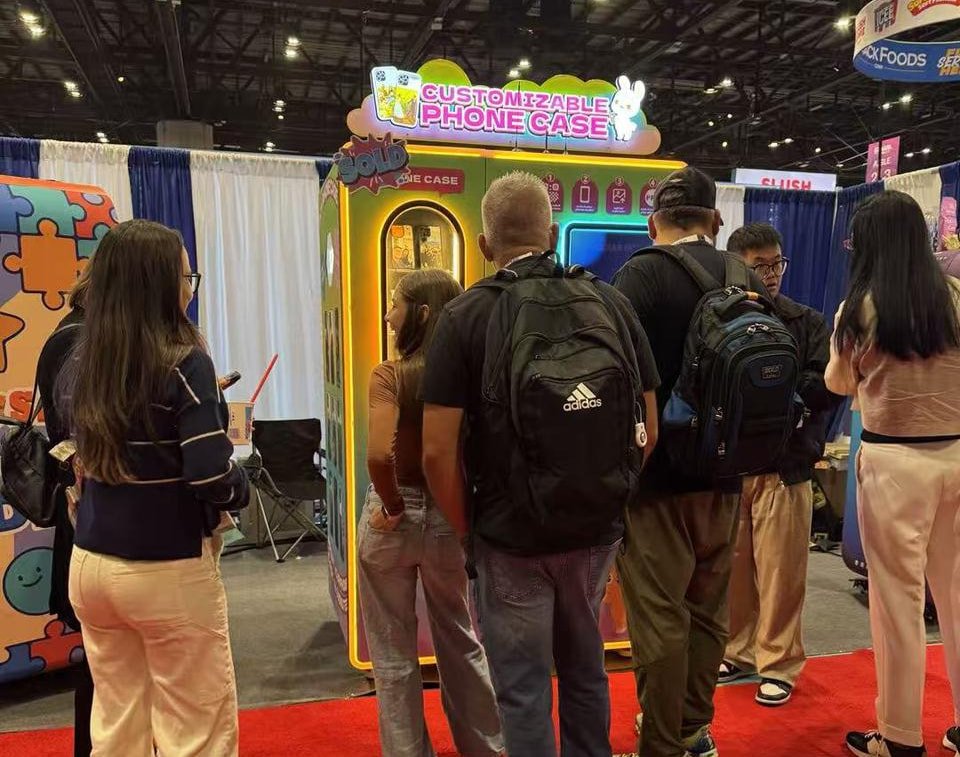
The long-term value does not come from a single machine,
but from the ability to repeat a working method across locations and scenarios.
Those who treat this as a system tend to build sustainable returns.
Those who treat it as a one-time experiment often do not.
Part I Summary
Before discussing machines, locations, or numbers, it is essential to understand one thing:
Phone case printing vending machines succeed not because of hardware,but because they sit at the intersection of personalization, timing, and scenario.
With this foundation in place, the following sections will focus on:
-
How money is made
-
How risks are managed
-
How the model is deployed and scaled in real-world conditions
Part II — How the Business Makes Money
Chapter 4 | The Revenue Logic (Without Complex Models)
4.1 Understanding the Core Revenue Logic
At its core, this business follows a very simple principle:
Low material cost + high perceived value = sustainable margin
However, unlike traditional retail, value here is not created by branding alone or bulk purchasing power.
It is created by timing, personalization, and context.
Customers are not comparing prices online.
They are making a decision in the moment, based on:
-
What they see
-
Where they are
-
How they feel
This is why the same physical product can generate very different revenue outcomes in different scenarios.

4.2 Where Revenue Comes From
Revenue in this model is driven primarily by single-transaction customization, rather than repeat subscriptions or long-term contracts.
Typical revenue sources include:
-
Standard phone case customization
-
Premium materials or finishes
-
Scenario-based or themed designs
-
Limited-time or exclusive templates

Importantly, customers are not forced into upsells.
Instead, they self-select higher-value options when the design or scenario feels meaningful.
This makes revenue growth more organic and less dependent on aggressive selling tactics.
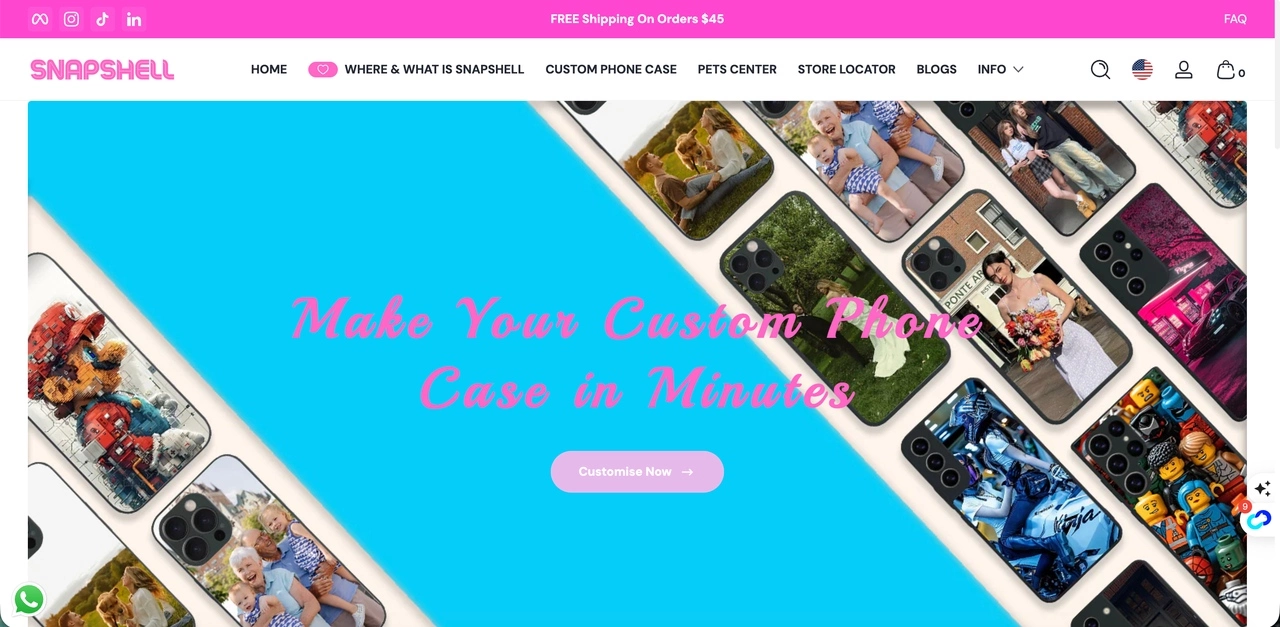
In addition, vending machines can be directed to the website to sell more stock online, or customized products, becoming another big source of revenue, which will be very profitable in the medium and long term.
such as SnapShell
4.3 Why Perceived Value Matters More Than Cost
In many businesses, profitability depends on controlling costs to the smallest detail.
In this model, perceived value plays a far larger role.
From the customer’s perspective:
-
They are not buying plastic and ink
-
They are buying a personalized result, created instantly
-
They are paying for convenience, uniqueness, and experience
As long as the experience feels smooth, intuitive, and rewarding, price sensitivity tends to be significantly lower than in traditional accessory retail.
This is why operational focus should prioritize:
-
Print success rate
-
Visual quality
-
User experience
rather than competing on the lowest possible price.

4.4 Scenario-Based Pricing Logic
Pricing in this business is not fixed globally.
For example:
-
A phone case printed in a tourist attraction carries souvenir value
-
A phone case printed at an event carries emotional or social value
-
A phone case printed in a mall carries impulse and lifestyle value
The goal is not to find a single “perfect price,”but to ensure that price matches context.
When price aligns with scenario, customers rarely question it.
Chapter 5 | Return, Risk, and Reality
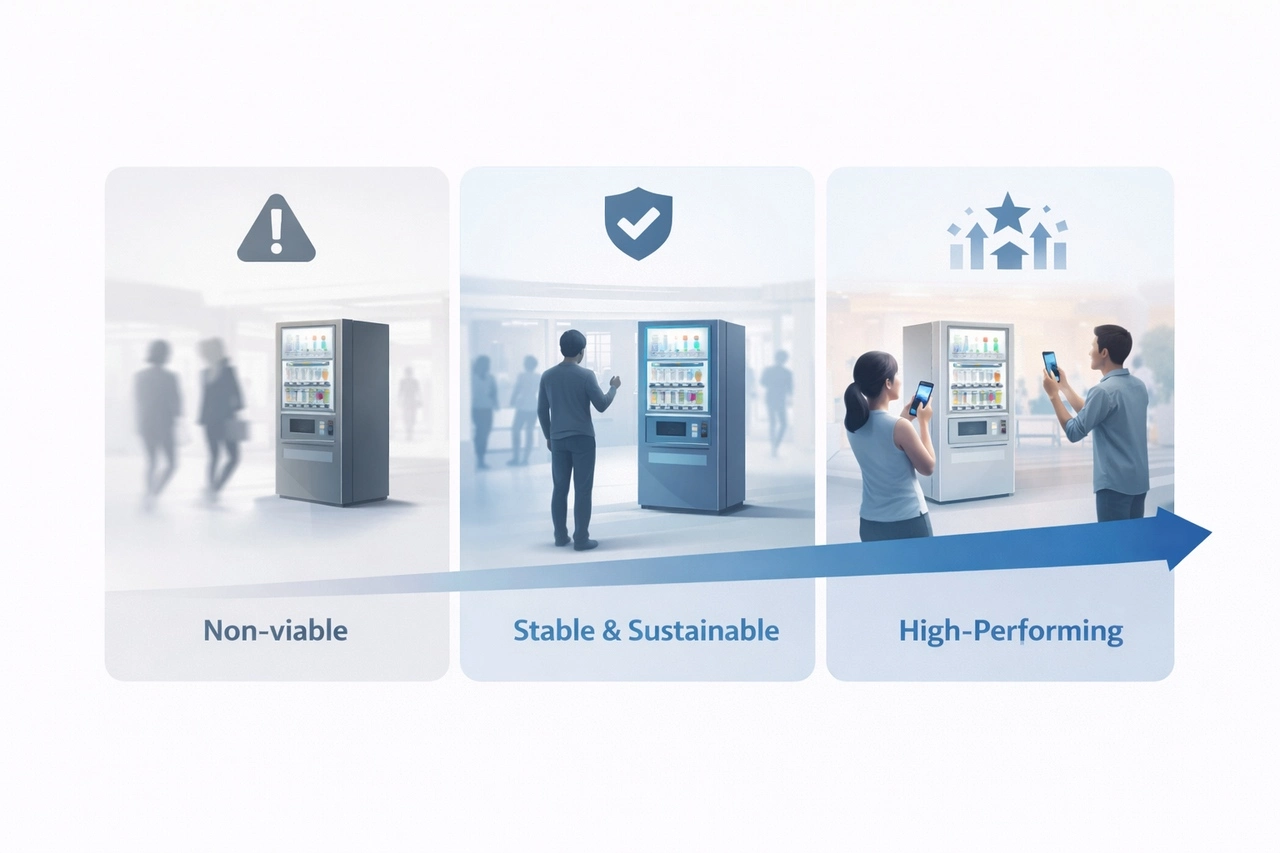
5.1 Three Performance States Every Operator Should Expect
Rather than presenting one optimistic outcome, it is more realistic to understand this business in three possible states:
- Non-viable
- Poor location or low engagement
- Insufficient visibility or foot traffic
- Misalignment between price and audience
- Stable and Sustainable
- Consistent daily orders
- Predictable operational rhythm
- Manageable maintenance and costs
- High-Performing
- Strong scenario fit
- High user engagement and sharing
- Clear potential for replication
Most successful operators focus first on reaching state two.State three is an outcome of optimization, not a starting point.
5.2 What Actually Impacts Profitability
In practice, profitability is influenced far more by execution choices than by equipment specifications.
Key factors include:
-
Location visibility and positioning
-
Scenario relevance
-
Content and design freshness
-
Operational consistency
Machines do not generate profit on their own.
Well-managed machines do.
This is why the same machine can produce very different results under different operators or in different environments.
5.3 A Healthy Way to View Payback
Payback period is often the first question asked.
While it is an important metric, it should not be viewed in isolation.
A healthier approach is to ask:
-
Has the model been validated?
-
Is performance consistent, not accidental?
-
Can the results be repeated elsewhere?
Fast payback without stability often leads to operational burnout or early failure.
Slower but stable performance creates long-term options.
This business rewards discipline and patience more than speed.

5.4 Risk Is Part of the Model — and That Is Acceptable
Every physical retail project carries risk.
The advantage of this model is that:
-
Initial scale can be small
-
Adjustments can be made quickly
-
Exit decisions can be clear and controlled
Risk does not come from the machine itself.
It comes from:
-
Poor location decisions
-
Lack of operational follow-through
-
Unrealistic expectations
When approached as a structured project rather than a gamble,
risk becomes manageable rather than intimidating.
Part II Summary
This business does not succeed because it sells phone cases cheaply.
It succeeds because it sells meaningful, timely customization in the right context.
Profitability is driven less by formulasand more by alignment —between scenario, experience, and execution.
With a clear understanding of how money is made and where risks lie,
the next step is to focus on how this model is actually deployed in real-world conditions.
Part III — From 0 to 1 to Scale
Chapter 6 | Phase One: Single-Machine Validation
6.1 The Purpose of the First Machine
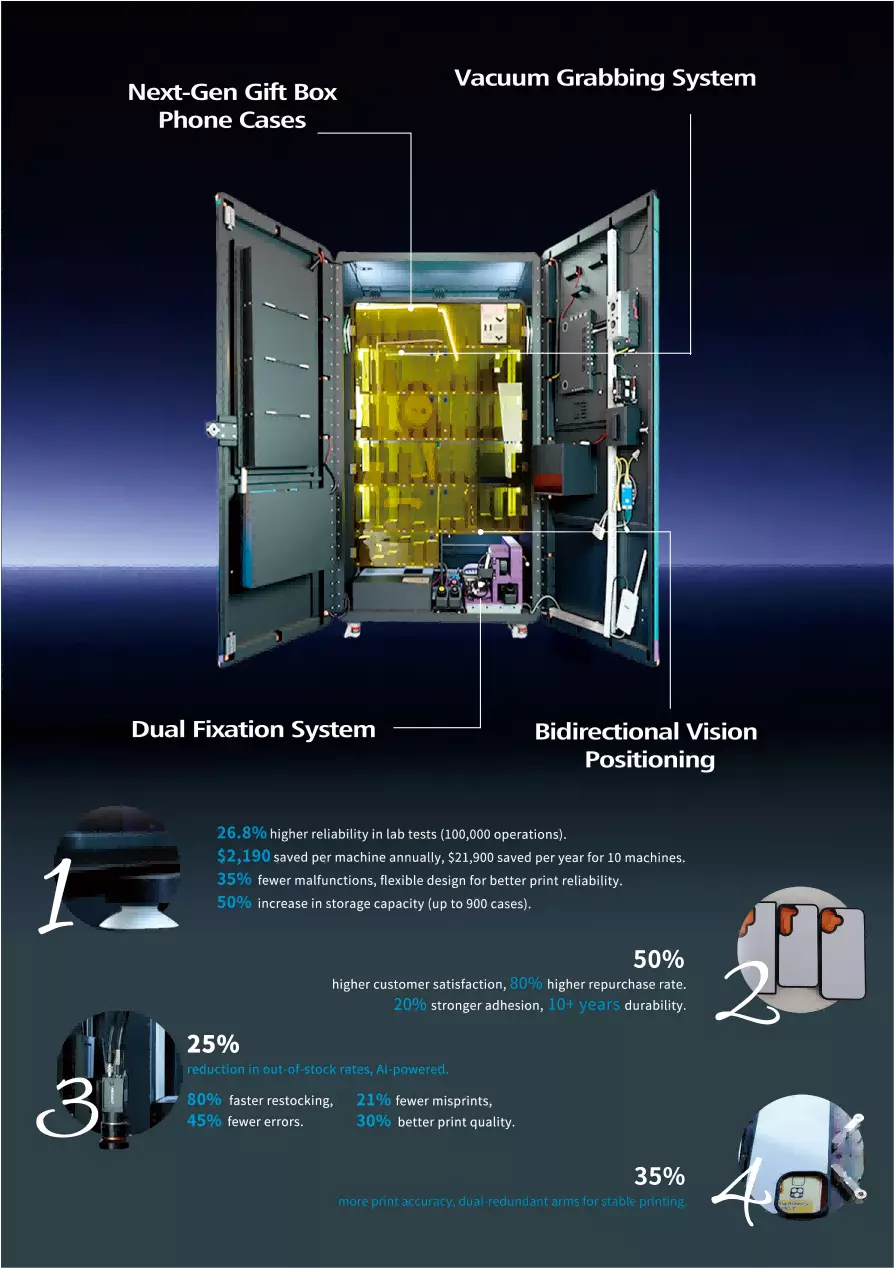
The first machine is not purchased to maximize profit.
It is deployed to validate the business logic.
At this stage, the most important questions are:
-
Does this location generate real interaction?
-
Are customers willing to pay in this scenario?
-
Can daily operations run smoothly and consistently?
Many failures happen because operators skip this phase and move directly to expansion.
Validation is not a delay — it is a risk control mechanism.
6.2 What Success Looks Like in the Validation Phase
Success during validation is not defined by peak performance.
It is defined by consistency.
Key signs of validation include:
-
Regular daily orders rather than occasional spikes
-
Stable machine operation with minimal downtime
-
Positive user reactions and repeat interactions
A machine that performs “reasonably well every day” is far more valuable than one that performs exceptionally once and poorly afterward.

6.3 When to Adjust — and When to Stop
Not every location will work.
Knowing when to adjust and when to stop is part of professional execution.
Common adjustment actions include:
-
Improving visibility or placement
-
Updating templates or designs
-
Aligning price with audience expectations
If, after reasonable adjustments, results remain weak,
the correct decision may be to relocate or exit.
Stopping early is not failure —it is capital preservation.
Chapter 7 | Phase Two: Single-Point Optimization
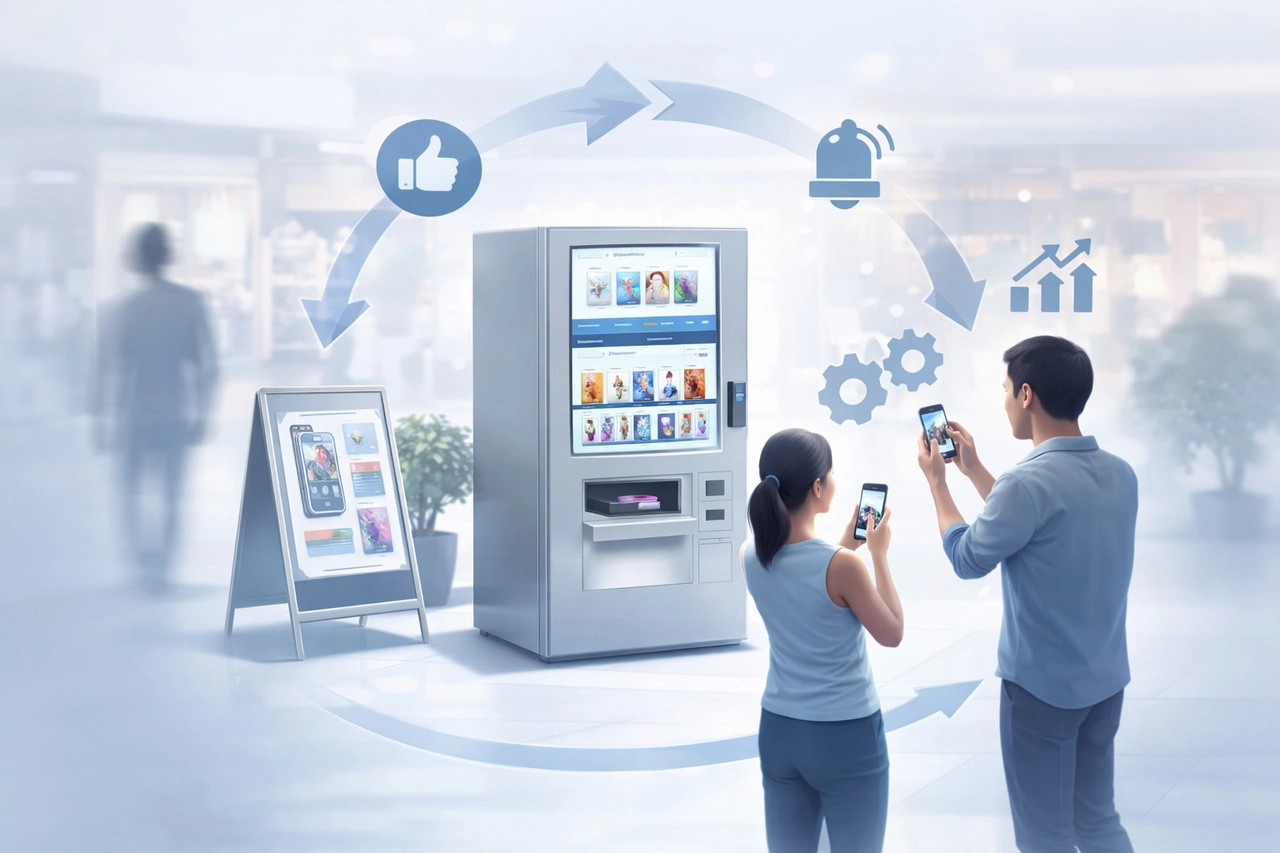
7.1 From “Can Sell” to “Sells Consistently”
Once a machine proves it can generate demand, the focus shifts.
The question is no longer:
“Will anyone buy?”
It becomes:
“How do we make this machine perform reliably every week?”
This phase is about turning a functioning setup into a repeatable routine.
7.2 The Three Optimization Levers
Most performance improvements come from three areas:
-
Visibility
-
Clear sightlines
-
Strong visual presence
-
Easy understanding of what the machine does
-
Content
-
Relevant designs
-
Regular updates
-
Clear appeal to the local audience
-
User Flow
-
Simple steps
-
Minimal confusion
-
Smooth payment and pickup
Optimization does not require constant experimentation.
It requires intentional, measured adjustments.

7.3 Why Discipline Beats Effort
A common misconception is that higher returns require more effort.
In reality, they require better habits.
Consistent operators:
-
Check machine status regularly
-
Keep designs fresh but not excessive
-
Address small issues before they become large problems
Machines fail gradually, not suddenly.
Discipline prevents gradual decline.

Chapter 8 | Phase Three: Replication and Expansion
8.1 When Scaling Makes Sense
Scaling should only happen after:
-
One machine has performed stably over time
-
Operational routines are clear
-
Performance is not dependent on constant manual intervention
Expansion is not about confidence.
It is about evidence.
8.2 Copying a Method, Not Just Buying Machines
Successful scaling does not come from purchasing more equipment.
It comes from copying:
-
The same location logic
-
The same content strategy
-
The same operational rhythm
Machines are assets.
Methods are multipliers.
Without a defined method, adding machines only multiplies complexity.
8.3 City-Level Expansion Logic
Expansion typically follows a simple progression:
-
One proven location
-
Several similar locations
-
A small local network
This approach allows:
-
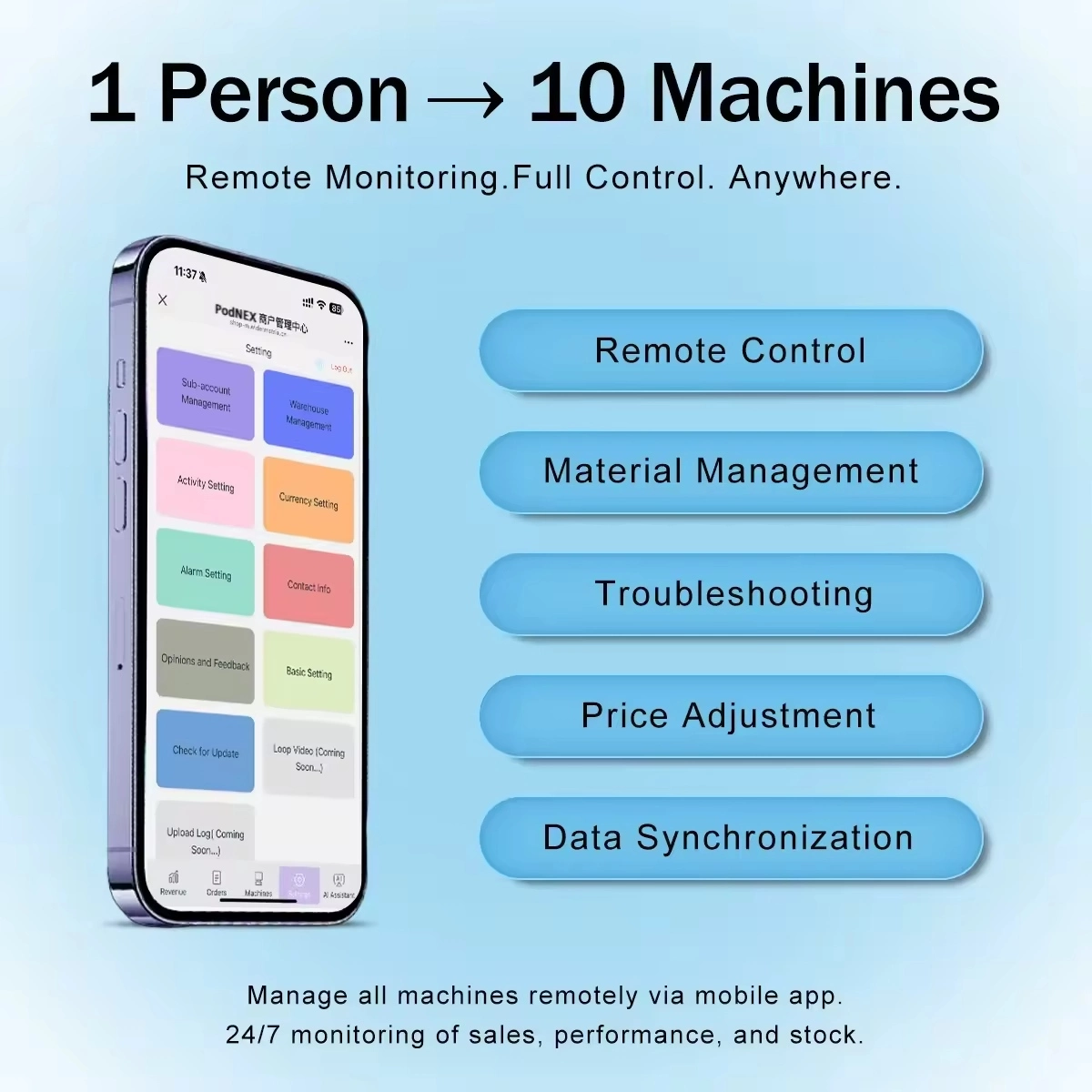
Shared maintenance routines
-
Centralized content updates
-
Easier performance comparison
Growth becomes controlled rather than chaotic.
Part III Summary
This business does not reward impatience.
It rewards those who:
-
Validate before expanding
-
Optimize before scaling
-
Replicate methods, not assumptions
From one machine to many,success depends less on ambitionand more on structured execution.
With a clear path from validation to expansion,
the next step is to examine the four systems that ultimately decide success or failure.
Part IV — The Four Systems That Decide Success
Location × Operations × Marketing × Branding
Chapter 9 | Location: Where Most Outcomes Are Decided
9.1 Location Is a Strategy, Not a Cost Decision
Many first-time operators treat location as a cost issue:
-
Lower rent feels safer
-
Less negotiation feels easier
In reality, location is not a cost variable —it is a strategic decision.
A strong location can compensate for average execution.
A weak location cannot be saved by even the best machine.
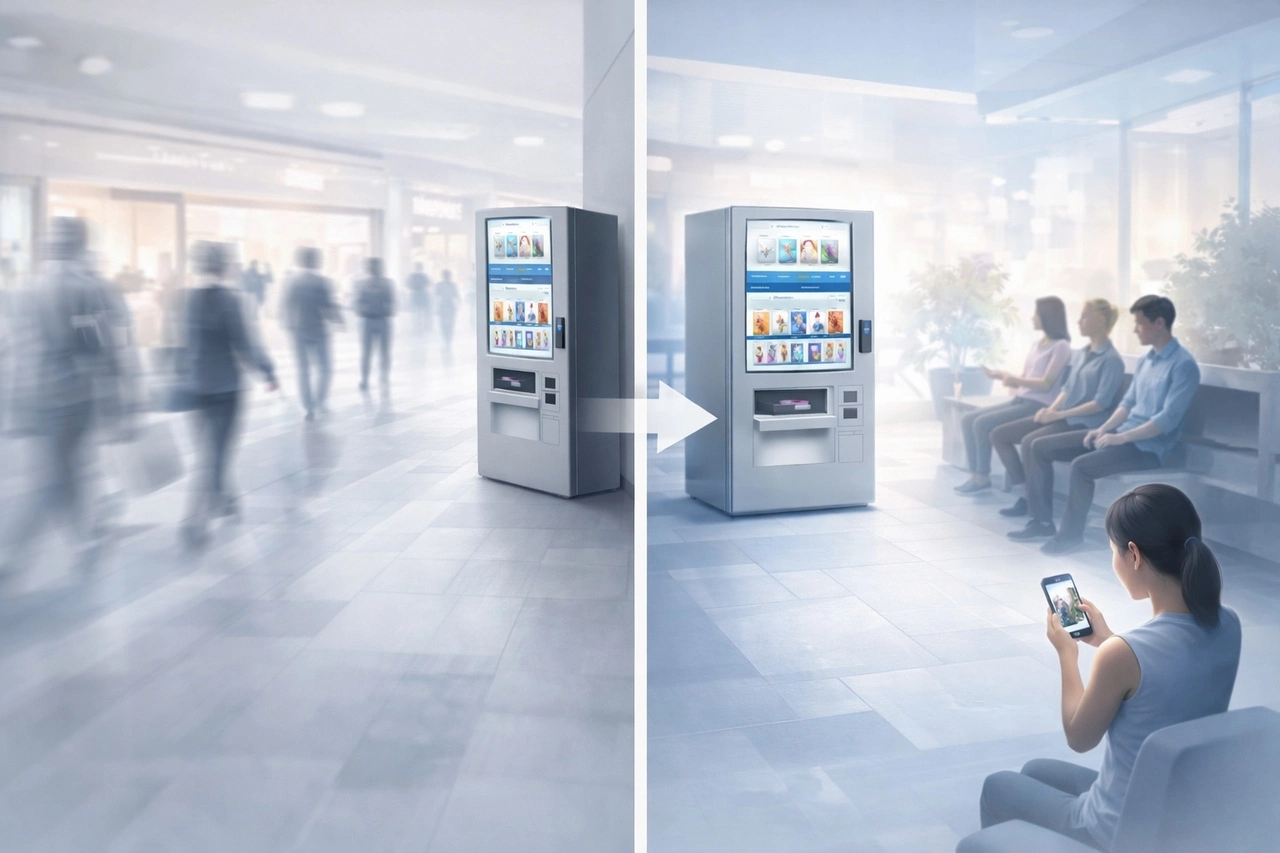
9.2 Foot Traffic Is Not Enough
High foot traffic does not automatically translate into sales.
What truly matters is whether people:
-
Can see the machine easily
-
Have time to stop
-
Are in the right emotional state
A corridor with fast-moving traffic may look busy but generate few interactions.
A smaller space with waiting time and visibility may outperform it consistently.
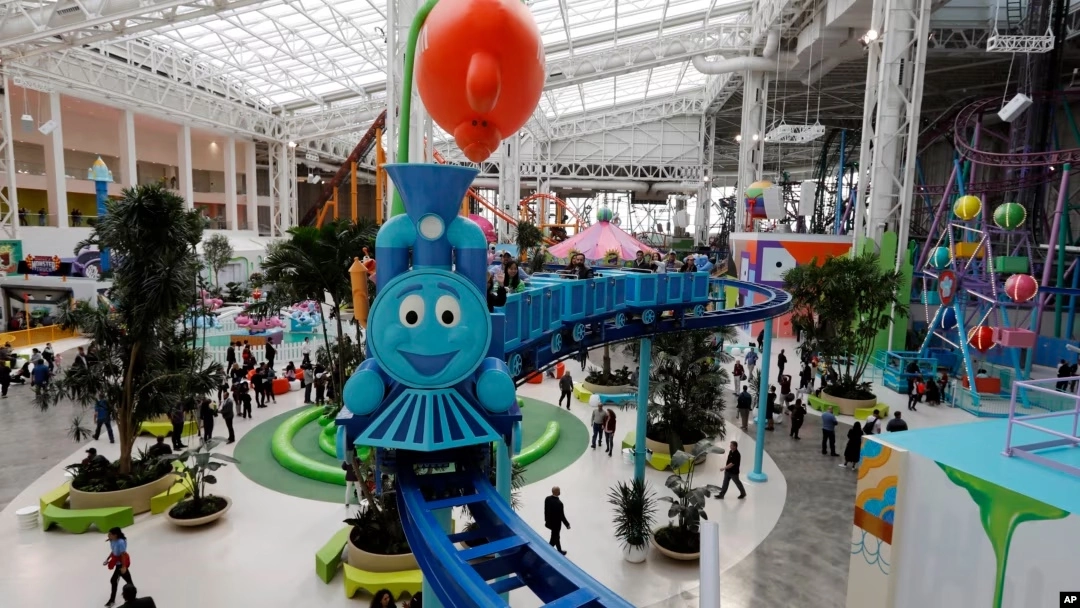
9.3 Scenarios That Naturally Work Well
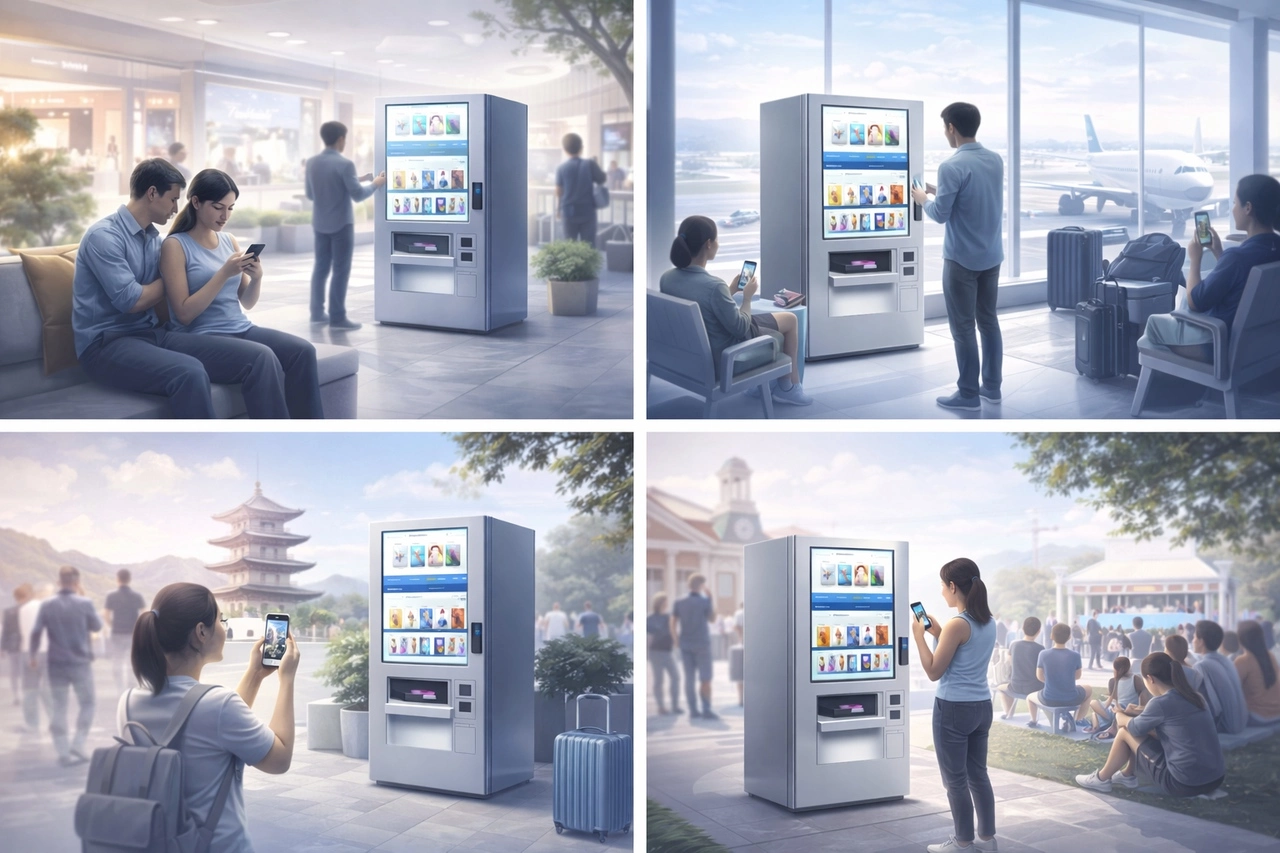
Phone case printing vending machines perform best in scenarios where emotion and idle time intersect.
Typical examples include:
-
Shopping malls with leisure zones
-
Airports and transport hubs
-
Tourist attractions and theme parks
-
Campuses and event spaces
In these environments, customization feels natural rather than forced.
9.4 The True Goal of Location Selection
The goal is not to find the cheapest or busiest place.
The goal is to place the machine where people are most likelyto notice, pause, and want to remember something.
Chapter 10 | Operations: Stability Over Complexity
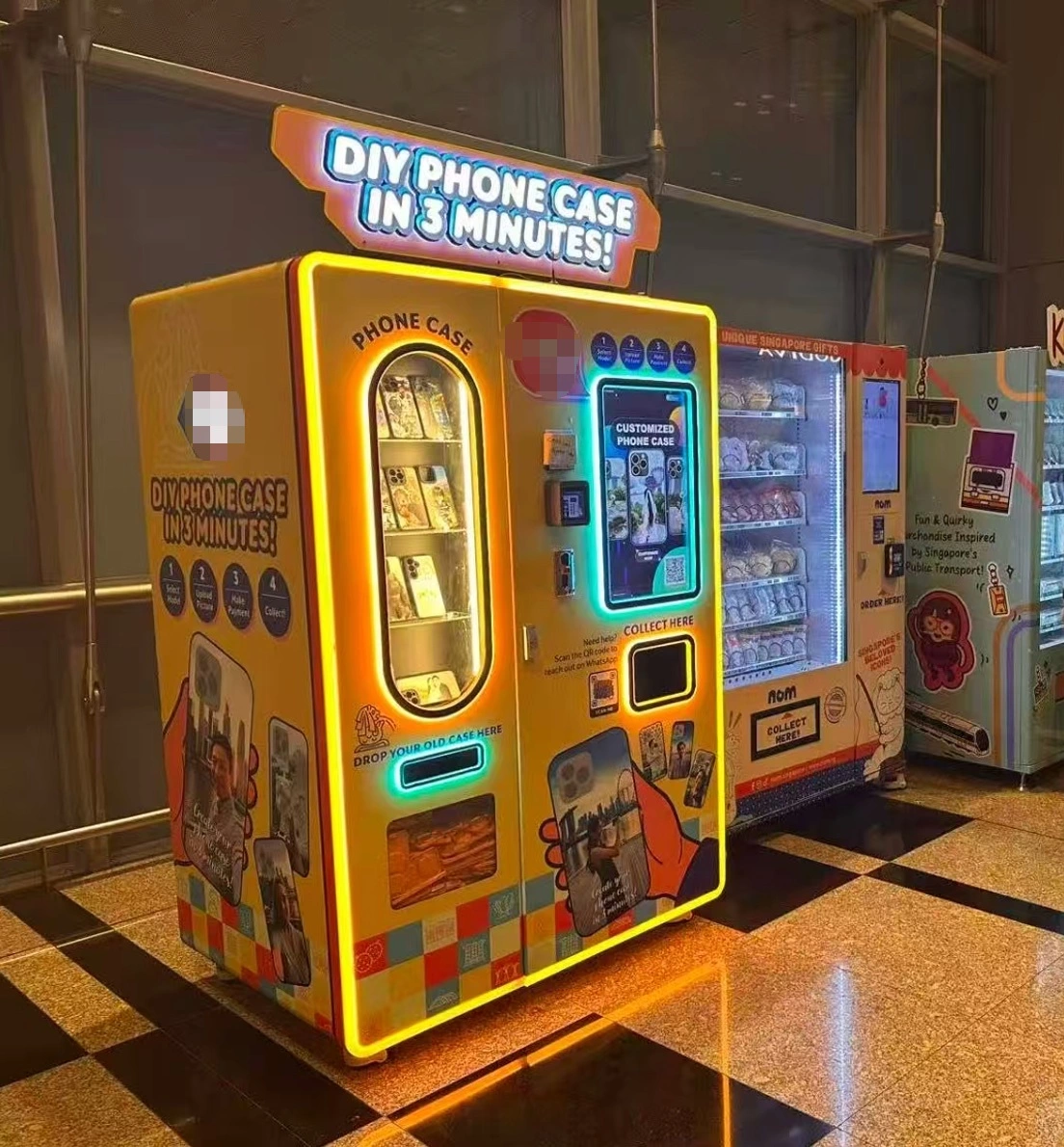
10.1 What Daily Operations Really Look Like
This business is not operationally heavy.
There is no inventory planning at scale, no staff scheduling, and no complex logistics.
However, it is sensitive to neglect.
Successful operators focus on:
-
Machine availability
-
Clean appearance
-
Reliable printing
Neglecting small details leads to gradual performance decline.
10.2 The Three Non-Negotiables
Regardless of location or volume, three rules must always be respected:
-
No Stockouts
Customers cannot buy what is not available.
-
No Downtime
A machine that is offline earns nothing.
-
No Negative Experience
One failed print can discourage future use.
These fundamentals matter more than speed or advanced features.
10.3 Why Operational Discipline Wins
Operators often underestimate how much performance is lost through inconsistency.
Checking the machine once a week is not enough.
Checking it daily does not require effort — it requires habit.
Discipline does not increase workload.
It reduces surprises.

Chapter 11 | Marketing: Visibility Creates Opportunity
11.1 Why Marketing Is No Longer Optional
In the past, placing a machine in a good location was enough.
Today, visibility alone is not sufficient.
If you do not actively show what the machine does,most people will walk past without understanding its value.
Marketing ensures that the machine is not just seen, but understood.
11.2 The Most Effective Content Types
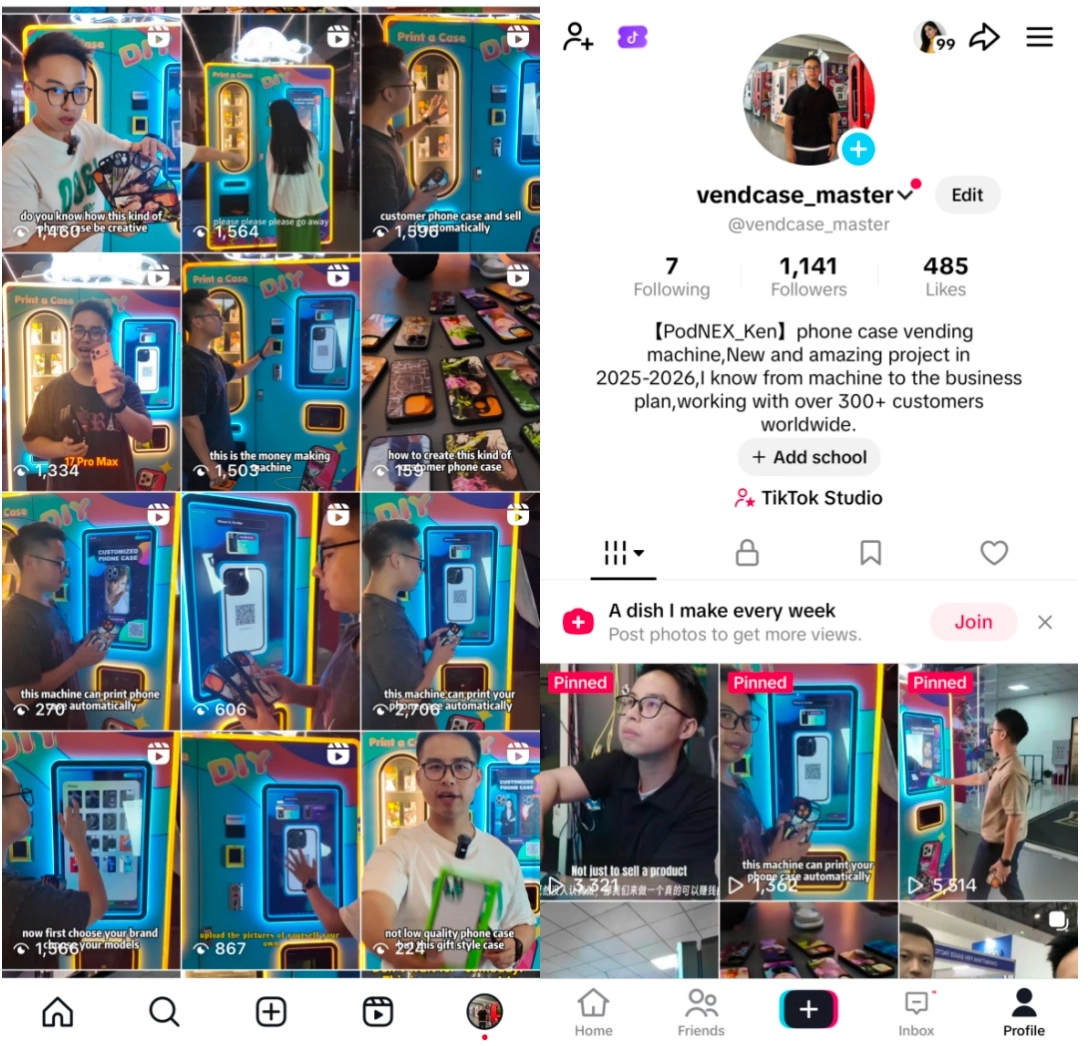
This business naturally generates content.
The most effective formats include:
-
The printing process itself
-
Customer reactions when collecting their cases
-
Before-and-after transformations
These moments require no scripting and no advertising language.
They work because they feel real.
11.3 The Real Role of Social Media
Social media is not primarily a sales channel in this model.
Its real functions are:
-
Proving real-world usage
-
Increasing trust with partners and venues
-
Supporting future expansion
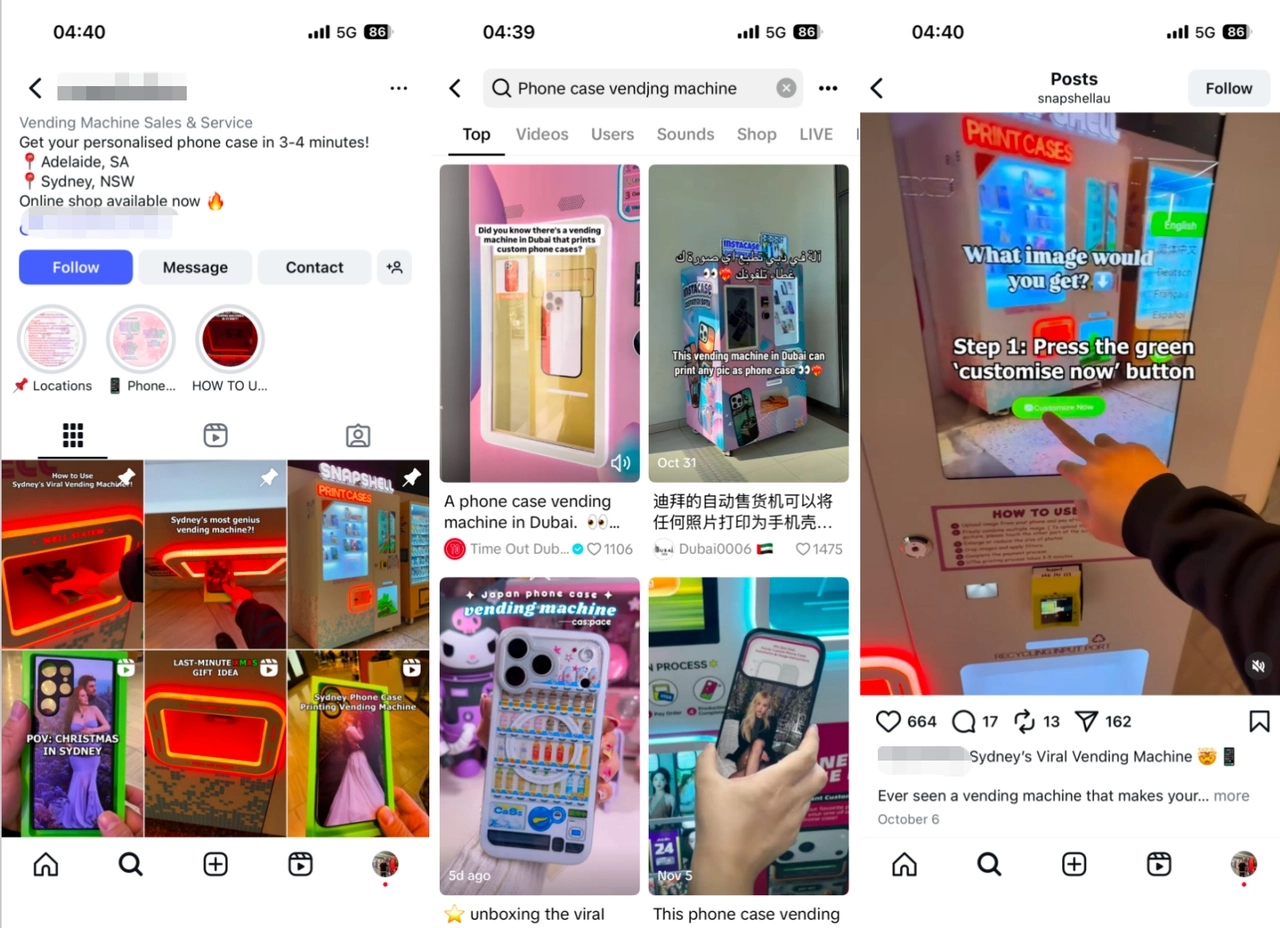
A machine that appears active online feels safer to host offline.
Chapter 12 | Branding: From Equipment to Project
12.1 Why Branding Matters in Unmanned Retail
Customers make emotional decisions.
Partners make rational ones.
Venue owners, landlords, and collaborators want to know:
-
Who is operating the machine
-
Whether it represents a serious project
-
Whether it will remain maintained and supported
Branding answers these questions silently.

12.2 Branding Is Not Design — It Is Consistency
Branding does not require expensive campaigns or complex visuals.
It requires:
-
A clear project name
-
Consistent language and messaging
-
A recognizable look and tone
Consistency signals long-term intention.
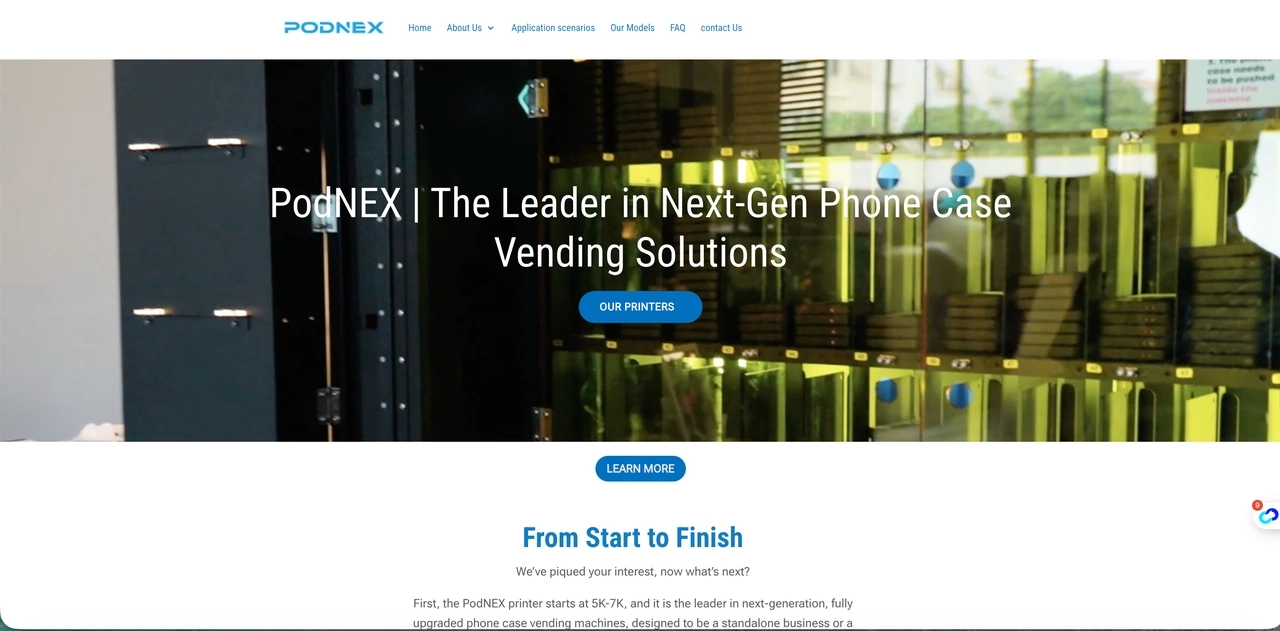
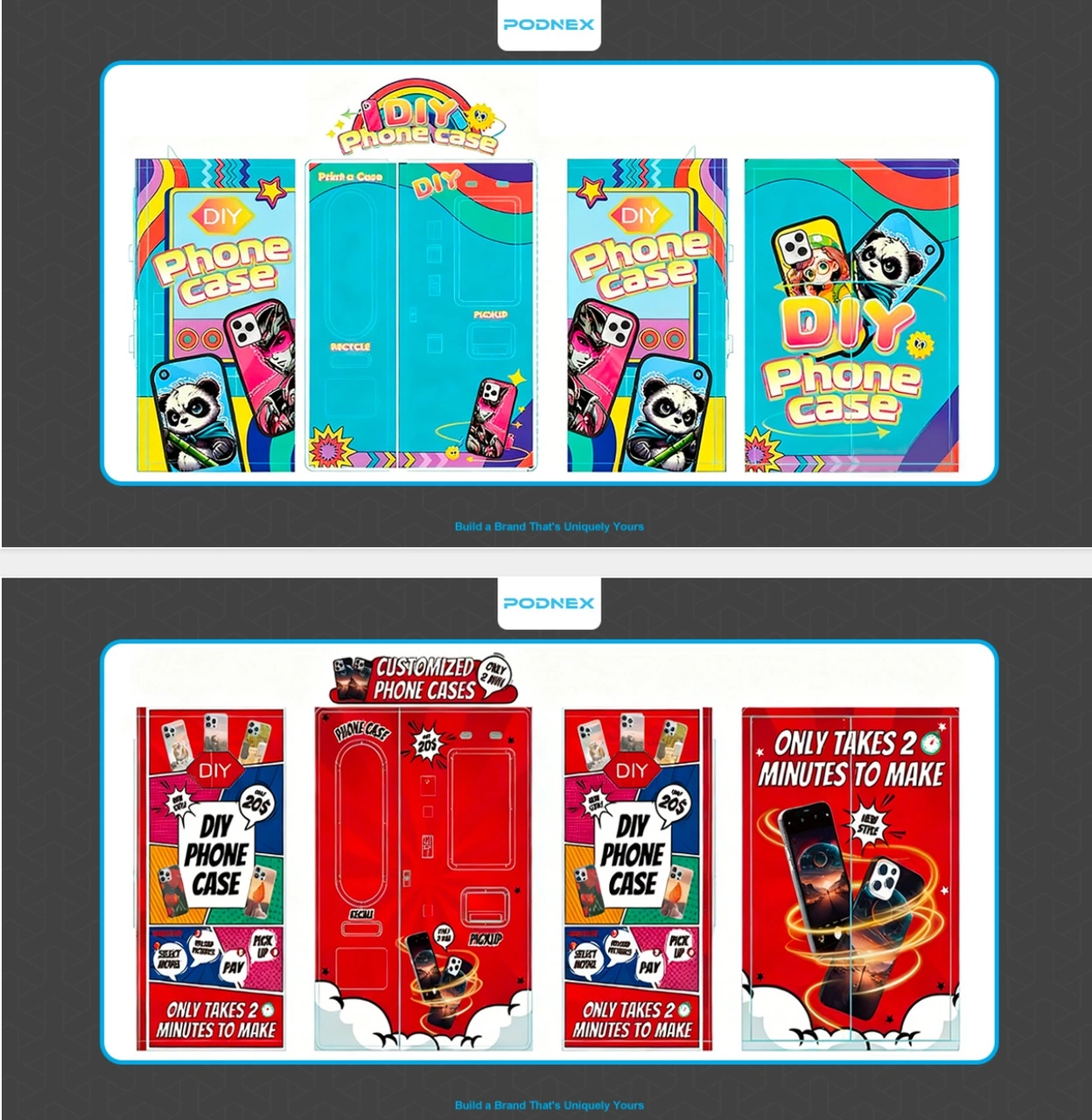
12.3 Lightweight Branding, Real Impact
Effective branding in this business is practical:
-
Clean machine appearance
-
Unified content style
-
Repeated presence in real scenarios
The goal is not to look large.
The goal is to look reliable.
Part IV Summary
When operators fail, it is rarely because of technology.
They fail because one or more systems are ignored:
-
Location is treated casually
-
Operations lack discipline
-
Marketing is absent
-
Branding is inconsistent
When these four systems work together,the machine stops being equipmentand becomes a scalable retail project.
Part V — Risk, Fit, and Long-Term Perspective
Chapter 13 | Who This Business Is For — and Who It Is Not
13.1 Who Is Well Suited for This Model
This business works best for individuals or teams who:
-
Have access to physical locations or commercial resources
-
Are comfortable testing and adjusting in real environments
-
View the project as a system rather than a shortcut
Successful operators tend to:
-
Be patient during validation
-
Respect operational routines
-
Make decisions based on observation, not assumption
They understand that progress comes from iteration, not from forcing results.

13.2 Who May Struggle With This Model
This model is not ideal for those who:
-
Expect immediate, guaranteed returns
-
Are unwilling to manage or monitor operations
-
View the machine as a “set and forget” investment
Unmanned does not mean unmanaged.
Without basic attention and responsibility, even the best location will underperform.
13.3 A Simple Self-Assessment Before Starting
Before entering this business, it is helpful to ask:
-
Do I have realistic expectations?
-
Am I willing to test before scaling?
-
Can I commit to basic operational discipline?
Clear answers reduce future disappointment.
Chapter 14 | Common Risks and How to View Them
14.1 Location Risk
Location risk is the most significant variable.
Even experienced operators may misjudge:
-
Foot traffic behavior
-
Audience relevance
-
Visibility and flow
The key is not avoiding mistakes entirely,
but recognizing them early.
Relocation or adjustment is often a smarter decision than prolonged persistence.
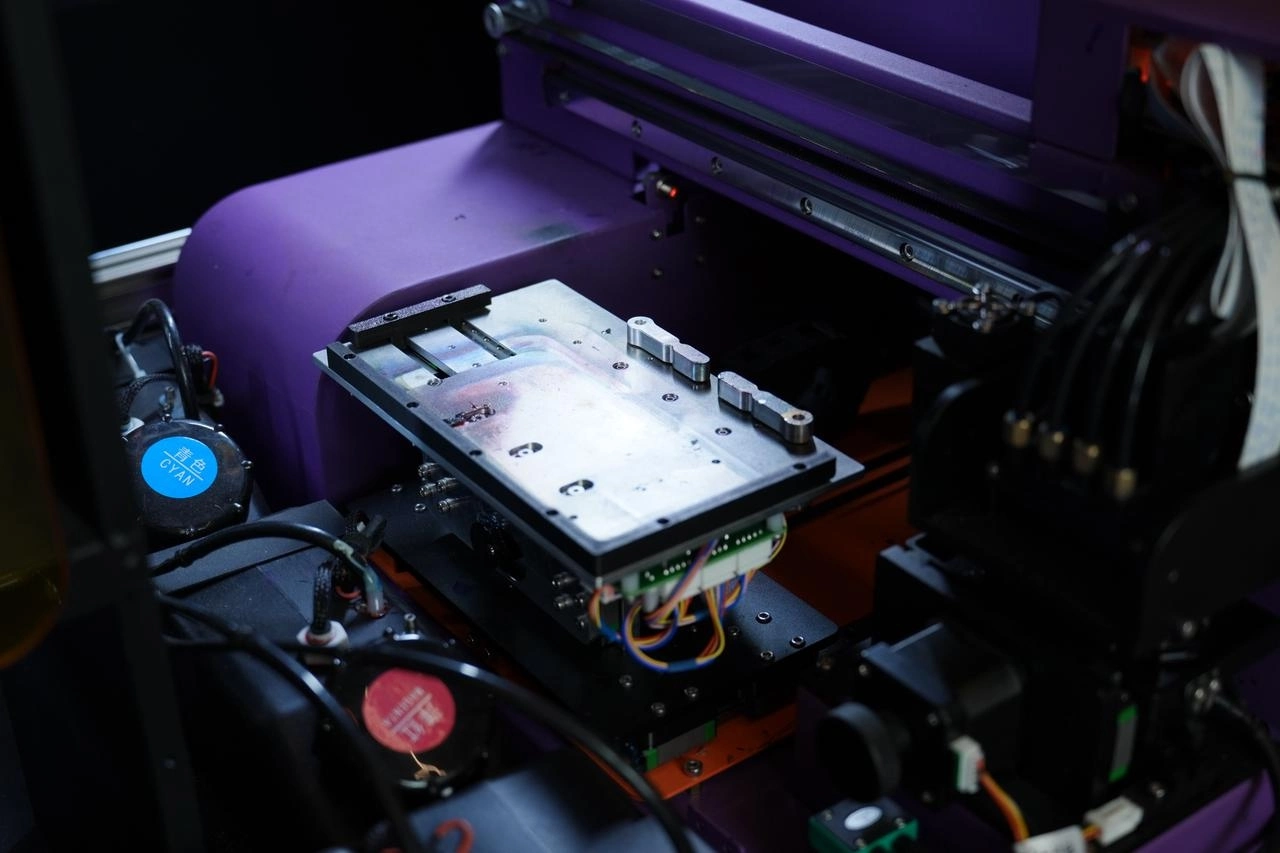
14.2 Operational Risk
Operational risk rarely comes from major failures.
It usually comes from:
-
Gradual neglect
-
Infrequent checks
-
Delayed responses to small issues
Machines rarely fail suddenly.
They fail quietly.
Regular habits are the best protection.
14.3 Market and Execution Risk
Markets evolve.
Design trends change.
Audience preferences shift.
Operators who refresh content and observe user behavior remain relevant.
Those who rely on initial success often stagnate.
Execution, not novelty, sustains performance.
14.4 The Value of Adjustment and Exit
A mature project always includes the option to adjust or exit.
Knowing when to:
-
Change a location
-
Reposition a machine
-
Pause or stop a project
is a sign of professionalism, not weakness.
Capital preserved can be redeployed.
Experience gained remains valuable.
Part V Summary
This business rewards those who:
-
Enter with clarity
-
Execute with discipline
-
Adjust with humility
Long-term results do not come from avoiding risk,but from managing it thoughtfully.
With a clear understanding of fit, risk, and perspective,
the final section focuses on turning insight into practical action.
Part VI — Action Guide & Appendices
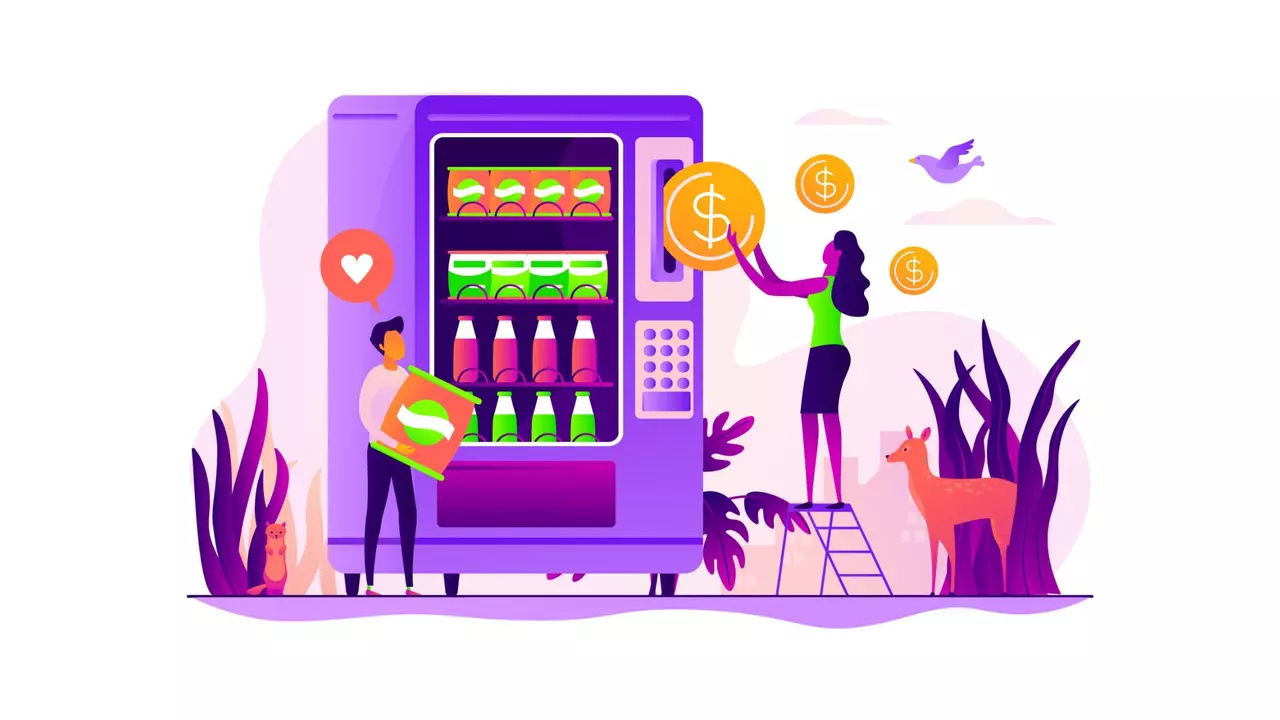
Chapter 15 | How to Start, Step by Step
15.1 A Practical Way to Begin
Starting this business does not require a large-scale commitment.
A disciplined, phased approach is more effective than aggressive expansion.
A recommended starting path includes:
-
One machine
-
One carefully selected location
-
One clear validation period
The objective is not speed, but clarity.
15.2 The First Questions to Answer
Before moving forward, operators should be able to answer:
-
Why this location?
-
Why this scenario?
-
What kind of customer behavior is expected here?
Clear reasoning at the beginning reduces unnecessary adjustments later.
15.3 Validation Before Expansion
During the initial phase, focus on observation rather than optimization.
Key observations include:
-
How people interact with the machine
-
Where confusion occurs
-
What designs attract attention
Only after behavior becomes predictable should optimization and scaling be considered.
15.4 Building Toward Scale
Scaling should be gradual and intentional.
Before adding another machine, ensure that:
-
The current setup runs smoothly
-
Operational routines are stable
-
Results are not dependent on constant intervention
Scaling is not an upgrade —it is a responsibility multiplier.
Chapter 16 | Reference Tools and Appendices
16.1 Key Concepts and Terminology
This white paper uses several recurring concepts:
-
Scenario-based retail
-
Instant customization
-
Unmanned operation
-
Perceived value
Understanding these concepts as a system, rather than in isolation, is essential for long-term success.
16.2 Deployment Checklists (Reference)
Typical deployment considerations include:
-
Location visibility and accessibility
-
Power and network readiness
-
Initial content and design setup
-
Basic operational routines
Checklists are not about restriction —they are about consistency.
16.3 Decision Reference Framework
When facing uncertainty, return to first principles:
-
Is the scenario appropriate?
-
Is the experience clear and intuitive?
-
Is execution consistent?
If the answer to any of these questions is “no,”
adjustment is usually required before expansion.
16.4 Using This White Paper in Practice
This document is designed to be:
-
Read from start to finish for understanding
-
Referenced by section during execution
-
Shared with partners for alignment
It is not intended to replace experience,
but to shorten the learning curve.
Closing Note
This white paper does not claim that phone case printing vending machines are suitable for everyone.
What it demonstrates is that:
-
When approached as a system
-
When deployed with discipline
-
When adjusted based on reality
They can become a stable, repeatable retail project.
Success in this business is not about finding a perfect formula,but about consistently making reasonable decisions.
Those who treat it as a long-term project
tend to build options.
Those who treat it as a shortcut
often do not.